

Coconut water for kids: yes or no?
As a parent you quickly find yourself searching for drinks that are tasty but not loaded with sugar. Coconut water for kids regularly comes up in that search. It sounds natural, it's marketed as healthy, but is it actually a good choice for children, and from what age?
What makes coconut water appealing for kids
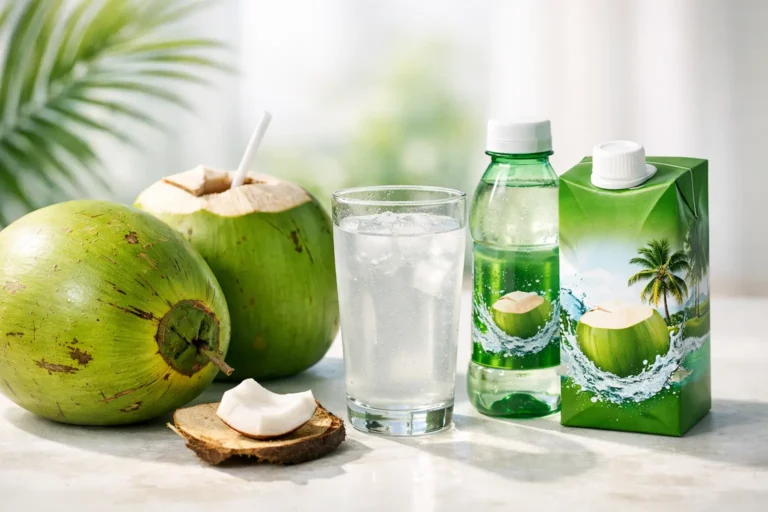
Coconut water has a light, slightly sweet, tropical taste that many children genuinely like, more than plain water but without the heavy sweetness of soda or fruit juice. It naturally contains some electrolytes and a moderate amount of natural sugar, which makes it feel like a "better" alternative to many children's drinks on the shelf.
For parents trying to reduce sugary drinks at home, that's an appealing starting point. It feels like a step in the right direction compared to soda or sweetened juice boxes.
Is it actually healthy for children?
In moderation, pure, unsweetened coconut water can be a reasonable drink for most children past infancy. It contains natural sugars rather than added ones, along with potassium, which isn't a bad thing. But it's not a necessity either; children who drink enough water and eat a balanced diet don't need coconut water to be healthy.
It's important to remember that coconut water still contains natural sugars and calories. It shouldn't replace water as a child's main drink throughout the day. Water remains the best default for regular thirst; coconut water can be a nice addition or occasional treat rather than an everyday staple in large quantities.
What age is appropriate?
For very young children, especially toddlers and infants, it's wise to be cautious and talk to a pediatrician before introducing coconut water, due to its sugar and mineral content relative to a small body. For older children, from preschool age onward, small amounts as an occasional drink are generally fine for most healthy kids, but as with any drink containing natural sugars, moderation matters.
If you're unsure, especially for a child with any specific health condition, it's always best to check with your pediatrician rather than relying on general guidance.
How to introduce it sensibly
Start small. A small glass alongside a meal, or after a sporty afternoon, is a reasonable way to introduce it. It doesn't need to become a daily ritual; treating it as one of several drink options keeps things balanced.
It also helps to choose a pure, unsweetened version. Some coconut water products on the market are blended with added sugar or juice, which defeats the purpose of choosing something more natural. Checking the label for a short ingredient list, ideally just coconut water, ensures your child gets the real thing without unnecessary extra sugar.
When it's a good fit
Coconut water for kids can work well after a sporty day at school, during a hot summer afternoon, or simply as a refreshing alternative to soda at a birthday party or family gathering. It's a nice way to offer something that feels special without going all the way to a sugary soft drink.
When it's not necessary
On an average day with no extra heat or activity, plain water is still the simplest, most appropriate choice for kids. There's no need to reach for coconut water as a daily replacement for water; it works better as an occasional, enjoyable addition rather than a everyday essential.
A reasonable, occasional choice
Coconut water for kids isn't a must-have, but it can be a pleasant, reasonably healthy alternative to sugary drinks when used in moderation and chosen in its pure, unsweetened form. As with most things in a child's diet, balance is what matters most: water as the daily default, and coconut water as a nice extra every now and then.